
Introduction
In an age dominated by digital technology, film cameras continue to hold a special place in the hearts of photographers, artists, and enthusiasts around the world. While smartphones and digital cameras offer convenience and instant results, film photography provides a unique experience that combines craftsmanship, patience, and creativity. A film camera is more than just a device for capturing images; it is a tool that encourages photographers to slow down, think carefully about composition, and appreciate the artistic process.
Film photography has a rich history that spans more than a century. It has documented wars, cultural movements, family memories, and some of the most iconic moments in human history. Despite the rapid advancement of digital imaging, film cameras have experienced a resurgence in popularity among younger generations and professional photographers alike. This renewed interest reflects a desire for authenticity, nostalgia, and the distinctive aesthetic qualities that film can provide.
This article explores the history, types, components, advantages, disadvantages, and future of film cameras, highlighting why they remain relevant in the modern world.
The History of Film Cameras
The development of film cameras began in the late nineteenth century. Early photographic methods relied on glass plates and complex chemical processes. The invention of flexible photographic film revolutionized photography and made cameras more practical for everyday use.
One of the most significant milestones occurred when George Eastman introduced roll film and the Kodak camera in 1888. His famous slogan, “You press the button, we do the rest,” made photography accessible to ordinary people. Instead of dealing with cumbersome equipment and chemical preparations, users could simply take pictures and send the camera back to the company for film processing.
Throughout the twentieth century, film cameras evolved dramatically. Manufacturers developed smaller, lighter, and more sophisticated models. During the 1920s and 1930s, 35mm cameras became increasingly popular. These cameras offered excellent image quality while remaining portable enough for travel and street photography.
The mid-twentieth century saw the rise of single-lens reflex (SLR) cameras, which allowed photographers to view exactly what the lens captured. This innovation improved accuracy and creative control. By the 1970s and 1980s, film cameras had reached a high level of technological sophistication, featuring automatic exposure systems, autofocus capabilities, and advanced metering systems.
The arrival of digital cameras in the 1990s gradually reduced the dominance of film photography. However, rather than disappearing completely, film photography transformed into a specialized art form valued for its unique characteristics and traditional methods.
How a Film Camera Works
A film camera operates by exposing light-sensitive film to light. When a photographer presses the shutter button, a shutter mechanism opens briefly, allowing light to pass through the lens and reach the film. The film contains a chemical emulsion that reacts to light and records the image.
After exposure, the film must be developed using chemical processes. During development, the latent image becomes visible and can then be printed onto photographic paper or scanned into a digital format.
Several key elements work together in a film camera:
Lens
The lens gathers and focuses light onto the film. Different lenses provide varying perspectives, from wide-angle views to powerful telephoto magnification. The quality of the lens significantly affects image sharpness, contrast, and overall appearance.
Aperture
The aperture is an adjustable opening within the lens. It controls how much light enters the camera. A larger aperture allows more light and creates a shallow depth of field, while a smaller aperture increases depth of field and keeps more of the scene in focus.
Shutter
The shutter determines how long the film is exposed to light. Fast shutter speeds freeze motion, while slower speeds can create motion blur and artistic effects.
Film
Film serves as the recording medium. Different film types produce different colors, grain structures, and contrast levels. Photographers often select film based on the mood and style they wish to achieve.
Viewfinder
The viewfinder allows photographers to compose and frame their images before taking a photograph.
Types of Film Cameras
Film cameras come in various designs, each suited to different photographic needs and artistic preferences.
Point-and-Shoot Cameras
Point-and-shoot cameras are simple and user-friendly. They often feature automatic exposure settings, making them ideal for beginners. These cameras became extremely popular during the 1980s and 1990s because of their convenience and portability.
Rangefinder Cameras
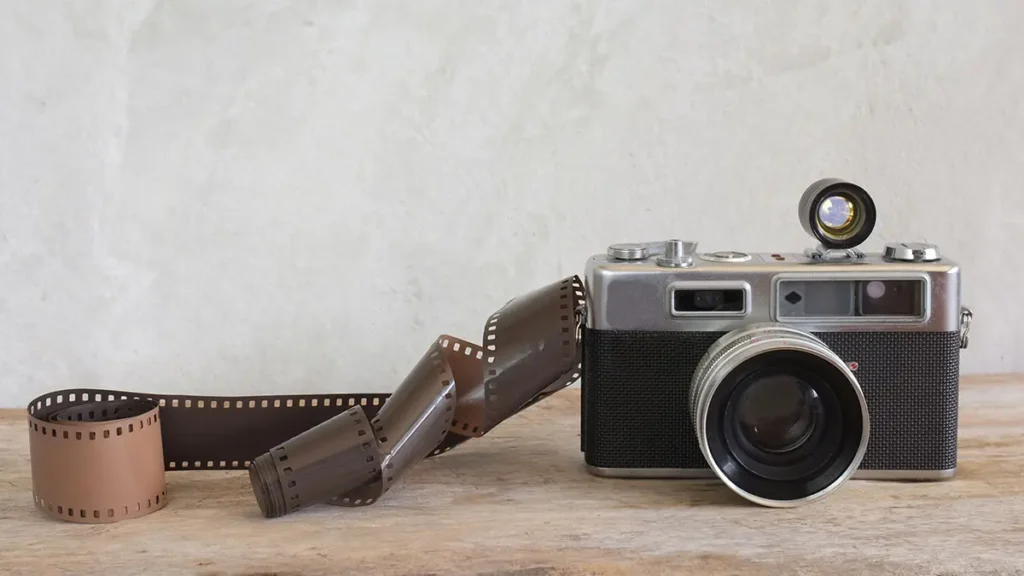
Rangefinder cameras use a separate viewing system to focus images. They are known for their compact design, quiet operation, and excellent image quality. Many street photographers favor rangefinders because they are discreet and easy to carry.
Single-Lens Reflex (SLR) Cameras
SLR cameras use a mirror system that allows photographers to see directly through the lens. This design provides accurate framing and focus. SLR cameras offer interchangeable lenses and extensive manual controls, making them popular among professionals and serious enthusiasts.
Twin-Lens Reflex (TLR) Cameras
TLR cameras feature two lenses stacked vertically. One lens is used for viewing while the other captures the image. These cameras became famous for portrait photography and medium-format film work.
Medium Format Cameras
Medium-format cameras use larger film than standard 35mm cameras. The larger negative size produces exceptional image quality, finer detail, and smoother tonal transitions. These cameras are commonly used in fashion, landscape, and commercial photography.
Large Format Cameras
Large-format cameras use sheet film and provide the highest image quality available in film photography. They are often used for architectural and fine art photography. Although they require careful setup and operation, they offer unmatched detail and perspective control.
Types of Film
Film photography offers a variety of film stocks, each with distinct visual characteristics.
Black and White Film
Black and white film emphasizes contrast, texture, and composition. It is often used for artistic and documentary photography because of its timeless appearance.
Color Negative Film
Color negative film is versatile and forgiving. It captures a wide range of colors and exposure levels, making it suitable for everyday photography.
Color Slide Film
Also known as transparency film, slide film produces positive images with vibrant colors and high contrast. It requires precise exposure but delivers stunning visual results.
Instant Film
Instant film develops shortly after exposure, providing immediate physical photographs. This format remains popular for creative projects and social events.
Advantages of Film Cameras
Despite the dominance of digital photography, film cameras offer several unique advantages.
Unique Image Quality
Film possesses characteristics that are difficult to replicate digitally. Grain structure, color rendering, and tonal transitions create a distinctive visual aesthetic appreciated by many photographers.
Encourages Thoughtful Photography
Since each frame has a cost, photographers tend to compose images more carefully. This deliberate approach often improves photographic skills and artistic awareness.
Dynamic Range
Certain film stocks can capture a wide range of highlights and shadows, producing natural-looking images with rich detail.
Physical Archiving
Film negatives serve as tangible records that can last for decades when stored properly. Unlike digital files, negatives do not depend on changing software or storage technologies.
Creative Experience
Many photographers enjoy the hands-on process of loading film, developing negatives, and creating prints. The experience itself becomes part of the artistic journey.
Disadvantages of Film Cameras
Film photography also presents several challenges.
Cost
Purchasing film, processing negatives, and making prints can become expensive over time. Digital photography often proves more economical for high-volume shooting.
Limited Exposures
A roll of film contains a fixed number of frames, typically 24 or 36. Photographers must use their exposures carefully.
Delayed Results
Unlike digital cameras, film does not provide instant feedback. Photographers must wait until development is complete before viewing their images.
Learning Curve
Film photography requires an understanding of exposure, focus, and development techniques. Beginners may find the process challenging at first.
Availability
Although film remains available, it is less common than it once was. Some film stocks and processing services have become harder to find.
Film Photography as an Art Form
Film photography occupies a unique place in the world of art. Many artists prefer film because of its organic qualities and imperfections. Grain, light leaks, and subtle color variations can contribute to the emotional impact of an image.
The slower pace of film photography encourages mindfulness and intentionality. Photographers often spend more time observing their surroundings and planning each shot. This approach can lead to stronger compositions and more meaningful photographs.
Film also plays an important role in education. Many photography instructors teach film techniques because they help students understand the fundamentals of exposure, lighting, and composition.
The Revival of Film Photography
In recent years, film photography has experienced a remarkable comeback. Young photographers who grew up with digital technology have become increasingly interested in analog processes. Social media platforms have helped popularize film photography by showcasing its distinctive aesthetic.
Several factors contribute to this revival:
- Nostalgia for traditional methods.
- Appreciation of film’s visual qualities.
- Desire for a slower, more intentional creative process.
- Interest in hands-on artistic experiences.
- Growing communities of film enthusiasts.
Manufacturers have responded by reintroducing film stocks and producing new analog cameras. Film photography workshops, exhibitions, and online communities continue to attract new participants.
Tips for Beginners
For those interested in exploring film photography, several practical tips can help ensure success.
Start with a Simple Camera
A basic point-and-shoot or entry-level SLR camera provides an excellent introduction to film photography.
Learn Exposure Basics
Understanding aperture, shutter speed, and film sensitivity is essential for creating well-exposed images.
Choose Reliable Film
Popular film stocks are often easier to use and provide consistent results for beginners.
Keep Notes
Recording camera settings and shooting conditions can help photographers learn from their successes and mistakes.
Practice Patience
Film photography rewards patience and careful observation. Taking time to compose each image often leads to better results.
The Future of Film Cameras
Although digital photography dominates the commercial market, film cameras continue to maintain a dedicated following. Rather than competing directly with digital technology, film has found a niche as a creative and artistic medium.
The future of film photography will likely depend on continued support from manufacturers, laboratories, and enthusiast communities. As long as photographers value authenticity, craftsmanship, and unique visual expression, film cameras will remain relevant.
Educational institutions, museums, and photography organizations also contribute to preserving analog traditions. Their efforts help ensure that future generations can experience the distinctive qualities of film photography.
Conclusion
Film cameras represent more than a photographic technology; they symbolize a creative philosophy centered on patience, craftsmanship, and artistic expression. From their origins in the nineteenth century to their modern revival, film cameras have played a crucial role in documenting history and shaping visual culture.
While digital photography offers speed and convenience, film photography provides a unique experience that encourages careful observation and thoughtful image-making. The tactile process of loading film, capturing images, and developing negatives creates a deeper connection between the photographer and the final photograph.
As technology continues to evolve, film cameras remain a powerful reminder that creativity often flourishes through limitations. Their enduring appeal demonstrates that photography is not only about capturing images but also about experiencing the art of seeing the world in a meaningful way.