
Introduction
In an era dominated by smartphones and advanced digital cameras, disposable cameras continue to hold a unique place in the world of photography. Despite rapid technological advancements, these simple, single-use cameras remain popular among photography enthusiasts, travelers, event organizers, and younger generations seeking a nostalgic experience. Disposable cameras offer a refreshing departure from instant digital photography by encouraging users to focus on the moment rather than endlessly reviewing and editing images.
The charm of disposable cameras lies in their simplicity. With no complicated settings, screens, or menus, users can concentrate entirely on capturing memories. The anticipation of waiting for film development adds excitement that digital photography often lacks. Whether used at weddings, vacations, parties, or artistic projects, disposable cameras provide a distinctive photographic experience that continues to attract people worldwide.
This article explores the history, functionality, advantages, disadvantages, popular uses, environmental impact, and future of disposable cameras.
What Is a Disposable Camera?
A disposable camera, also known as a single-use camera, is a simple film camera preloaded with photographic film. It is designed for temporary use and is generally intended to be returned for film processing after all exposures have been taken.
Most disposable cameras come equipped with:
- Preloaded film roll
- Fixed-focus lens
- Fixed shutter speed
- Built-in flash (in many models)
- Simple winding mechanism
- Lightweight plastic body
Unlike traditional film cameras, disposable cameras are sold ready to use. After taking all available photographs, the entire camera is taken to a photo processing lab, where the film is removed, developed, and printed or scanned.
Typically, disposable cameras contain 24 to 36 exposures, although some models offer different capacities.
The History of Disposable Cameras
Disposable cameras first gained popularity during the 1980s when photography companies sought affordable alternatives for casual photographers. The concept was developed to provide consumers with an easy way to take photographs without investing in expensive camera equipment.
One of the earliest successful disposable cameras was introduced by Fujifilm in the mid-1980s. The idea quickly spread throughout the photography industry, with major manufacturers such as Kodak, Canon, and Konica releasing their own versions.
During the 1990s, disposable cameras became extremely popular. They were commonly found in supermarkets, convenience stores, tourist attractions, and airports. Families often carried them on vacations, while event organizers placed them on reception tables for guests to capture candid moments.
The rise of digital cameras in the early 2000s caused a significant decline in disposable camera sales. Many industry experts predicted the complete disappearance of film photography. However, disposable cameras experienced a surprising revival during the late 2010s and early 2020s as younger generations embraced vintage aesthetics and analog photography.
Today, disposable cameras are once again fashionable, especially among creative communities and social media users who appreciate their authentic, unfiltered appearance.
How Disposable Cameras Work
Disposable cameras operate using basic photographic principles. Understanding their functionality helps users appreciate their simplicity.
Film Exposure
Inside the camera is a roll of photographic film coated with light-sensitive chemicals. When the shutter button is pressed, the camera briefly exposes the film to light entering through the lens.
The amount of light reaching the film determines how the image is recorded.
Film Advancement
After each photograph, users manually rotate a wheel to advance the film to the next frame. Some modern models use automatic film advancement mechanisms.
Fixed Focus Lens
Most disposable cameras feature fixed-focus lenses. These lenses are designed to keep subjects reasonably sharp within a specific distance range, usually from approximately one meter to infinity.
Flash System
Many disposable cameras include a built-in flash powered by a small battery. Users charge the flash before taking photographs in low-light conditions.
Film Development
Once all exposures have been used, the camera is returned to a processing lab. The film undergoes chemical development, creating negatives that can be printed or digitally scanned.
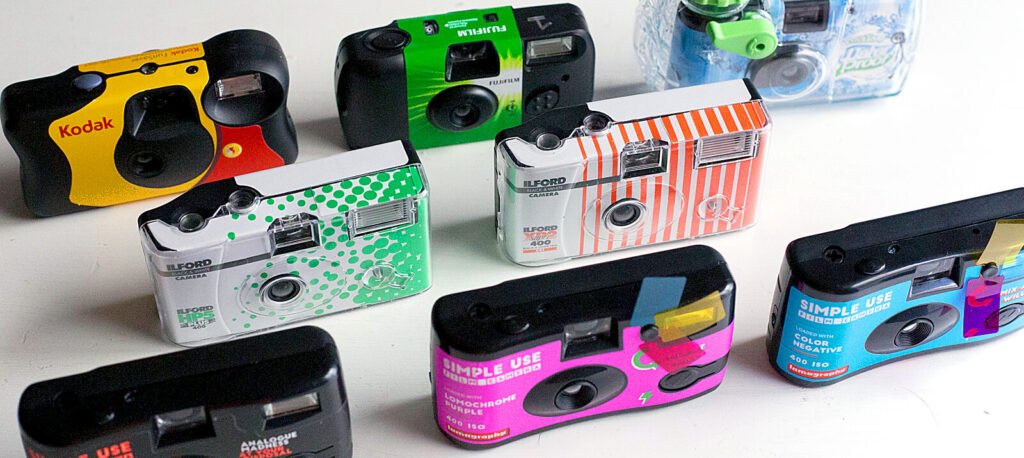
Types of Disposable Cameras
Although all disposable cameras share similar characteristics, several specialized varieties are available.
Standard Disposable Cameras
These are the most common models. They feature color film, a fixed-focus lens, and basic flash functionality.
Waterproof Disposable Cameras
Designed for underwater and outdoor use, waterproof disposable cameras feature sealed housings that protect the film from water damage.
They are commonly used for:
- Swimming
- Snorkeling
- Beach vacations
- Water parks
Black and White Disposable Cameras
Some manufacturers produce disposable cameras loaded with black-and-white film. These cameras are popular among artists and photography students seeking a classic photographic style.
High-Speed Film Cameras
These models contain film with higher ISO ratings, allowing better performance in low-light environments.
Wedding Disposable Cameras
Specially designed disposable cameras are often decorated and placed at wedding receptions to encourage guests to capture candid moments.
Advantages of Disposable Cameras
Disposable cameras offer numerous benefits that contribute to their continued popularity.
Simplicity
One of the greatest advantages is ease of use. Anyone can operate a disposable camera regardless of photography experience.
There are no:
- Exposure settings
- Focus controls
- Menus
- Batteries to recharge (except flash batteries)
This simplicity makes photography accessible to everyone.
Authentic Image Quality
Disposable cameras produce images with a distinctive look characterized by:
- Natural grain
- Soft focus
- Light leaks
- Unique color rendering
Many photographers intentionally seek these imperfections because they create a nostalgic and artistic atmosphere.
Encourages Mindful Photography
With only a limited number of exposures available, users tend to think carefully before taking each shot.
Unlike smartphones that allow hundreds of photographs in minutes, disposable cameras encourage intentional image-making.
Affordable
Disposable cameras are relatively inexpensive compared to professional digital cameras.
Their affordability makes them suitable for:
- Parties
- School events
- Weddings
- Travel adventures
No Digital Distractions
Disposable cameras allow users to remain present in the moment rather than constantly reviewing photographs on a screen.
This contributes to a more enjoyable and immersive experience.
Reliable in Various Conditions
Disposable cameras are generally durable and can function in environments where users may hesitate to risk expensive electronic equipment.
Disadvantages of Disposable Cameras
Despite their appeal, disposable cameras have several limitations.
Limited Number of Photos
Most disposable cameras contain only 24 to 36 exposures. Once the film is exhausted, the camera can no longer take photographs.
Development Costs
Film processing and printing can be expensive compared to digital photography, where images can be viewed immediately at no additional cost.
Lack of Instant Feedback
Users cannot review images immediately after taking them.
As a result:
- Mistakes cannot be corrected instantly.
- Poor lighting may go unnoticed.
- Composition errors may not become apparent until development.
Environmental Concerns
Although many disposable cameras are recycled by manufacturers, they still generate more waste than reusable cameras.
Lower Technical Quality
Disposable cameras generally produce lower-resolution images compared to modern digital cameras.
Factors affecting image quality include:
- Basic lenses
- Limited exposure control
- Film grain
- Restricted dynamic range
Popular Uses of Disposable Cameras
Disposable cameras remain popular across various settings.
Weddings
Wedding planners often place disposable cameras on guest tables.
Guests use them to capture:
- Candid moments
- Reception activities
- Behind-the-scenes interactions
The resulting photographs often reveal unique perspectives that professional photographers might miss.
Travel Photography
Travelers appreciate disposable cameras for their lightweight design and low replacement cost.
They are ideal for:
- Backpacking trips
- Beach vacations
- Adventure travel
Parties and Celebrations
Disposable cameras add entertainment value to birthdays, graduations, and family gatherings.
Guests enjoy documenting events from their own viewpoints.
Artistic Photography
Many artists intentionally use disposable cameras to achieve a vintage aesthetic that digital filters often struggle to replicate authentically.
Educational Purposes
Photography instructors sometimes use disposable cameras to teach fundamental concepts such as:
- Composition
- Lighting
- Timing
- Visual storytelling
Without automatic digital assistance, students gain a deeper understanding of photographic principles.
The Revival of Disposable Cameras
The resurgence of disposable cameras is one of the most interesting developments in modern photography.
Several factors contribute to this revival.
Nostalgia
Many people associate film photography with childhood memories and family vacations. Disposable cameras evoke a sense of nostalgia that digital devices cannot easily replicate.
Social Media Influence
Ironically, social media platforms have contributed to renewed interest in analog photography.
Users often share scanned disposable camera photographs because of their:
- Vintage appearance
- Natural imperfections
- Distinctive color tones
Desire for Authenticity
In an age of heavily edited digital images, disposable cameras offer authenticity.
Their imperfections make photographs feel more genuine and emotionally engaging.
Creative Expression
Young photographers increasingly seek creative alternatives to smartphone photography.
Disposable cameras provide a fresh artistic challenge by limiting technical control and encouraging experimentation.
Tips for Taking Better Photos with a Disposable Camera
Although disposable cameras are simple, certain techniques can improve results.
Use Adequate Lighting
Disposable cameras perform best in bright conditions.
Whenever possible:
- Shoot outdoors during daylight.
- Position subjects near windows indoors.
- Use flash in dark environments.
Keep a Steady Hand
Because shutter speeds are fixed, camera movement can cause blur.
Hold the camera firmly when taking photographs.
Move Closer to Subjects
Disposable cameras often struggle with distant subjects.
For stronger results:
- Fill the frame.
- Reduce unnecessary background distractions.
- Approach subjects when possible.
Be Selective
With limited exposures available, each photograph matters.
Think carefully about:
- Composition
- Timing
- Subject placement
Experiment Creatively
Disposable cameras often produce unexpected effects.
Try:
- Shooting through reflections
- Capturing motion
- Using unusual angles
- Photographing at night with flash
Environmental Impact and Recycling
Disposable cameras have faced criticism due to environmental concerns.
However, many manufacturers operate recycling programs.
When returned for processing:
- Film is removed.
- Plastic components are recovered.
- Internal mechanisms are reused.
Modern recycling systems significantly reduce waste compared to simple disposal.
Consumers can further minimize environmental impact by:
- Choosing recyclable models
- Using reusable film cameras when appropriate
- Supporting responsible processing labs
Disposable Cameras vs. Digital Cameras
The debate between disposable and digital cameras highlights different photographic philosophies.
Disposable Cameras
Advantages:
- Simple operation
- Unique aesthetic
- Encourages intentional shooting
- No digital distractions
Disadvantages:
- Limited exposures
- Processing costs
- Delayed results
Digital Cameras
Advantages:
- Instant review
- High image quality
- Unlimited storage options
- Extensive editing capabilities
Disadvantages:
- Expensive equipment
- Potential for over-shooting
- Constant screen dependence
Neither format is inherently superior. The best choice depends on the photographer’s goals and preferences.
The Future of Disposable Cameras
Despite technological advances, disposable cameras continue to attract new users. Their future appears promising within niche markets focused on creativity, nostalgia, and experiential photography.
Manufacturers are exploring innovations such as:
- Improved film quality
- Sustainable materials
- Enhanced recycling programs
- Hybrid film-to-digital services
As interest in analog photography grows, disposable cameras are likely to remain relevant for years to come.
Rather than competing directly with smartphones, they occupy a unique position as tools for artistic expression and memory-making.
Conclusion
Disposable cameras represent more than a simple photographic device; they symbolize a different approach to capturing life’s moments. Their simplicity, affordability, and distinctive image quality continue to resonate with photographers of all ages. While digital technology offers convenience and precision, disposable cameras provide something increasingly rare: anticipation, authenticity, and creative limitation.
The ongoing revival of disposable cameras demonstrates that photography is not solely about technical perfection. Many people value the emotional experience of waiting for developed film, embracing imperfections, and discovering unexpected results. Whether used at weddings, vacations, parties, or artistic projects, disposable cameras remind us that meaningful photographs often emerge from simplicity rather than sophistication.
As the photography world continues to evolve, disposable cameras remain a beloved and enduring tool that bridges the gap between nostalgia and creativity. Their continued popularity proves that sometimes the simplest technologies create the most memorable experiences.